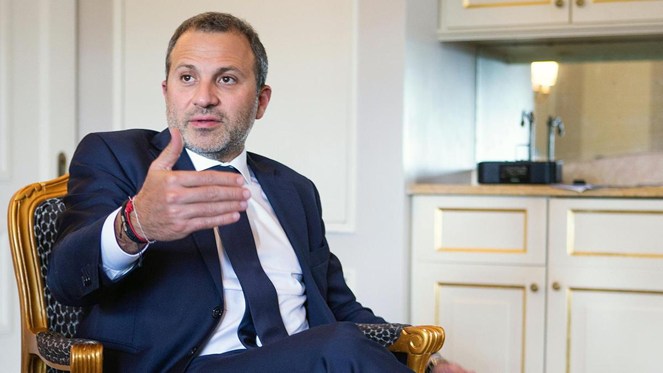
Free Patriotic Movement (FPM) leader MP Gebran Bassil stressed that October 13, 1990, is not merely a milestone in the party’s history, but a national cause rooted in freedom, sovereignty, independence, and state-building. He reaffirmed the FPM’s rejection of attempts to overthrow legitimate authority through force or chaos and its commitment to exclusive state control over weapons through a clear roadmap that includes Israeli withdrawal, strengthening the Lebanese Army, and reconstruction.
Bassil strongly opposed large-scale, systematic land sales, declaring: “We protect our land by refusing to sell it, not out of rejection of others, but to preserve our diversity and our presence. Any systematic, large-scale sale of land is unacceptable. My appeal to everyone is: Beware of selling your land, because land, like honor, is sacred.”
He also warned against adopting an electoral law that would undermine fair representation, Christian-Muslim parity, and Lebanon’s power-sharing system.
On political reform, Bassil stressed that implementing the Taif Agreement begins with decentralization.
“We are prepared to establish a Senate based on the Orthodox electoral law proposal, move toward a civil state, and pursue comprehensive secularization, beginning with a unified personal status law. This means abolishing sectarianism in its entirety, not merely political sectarianism,” he said.
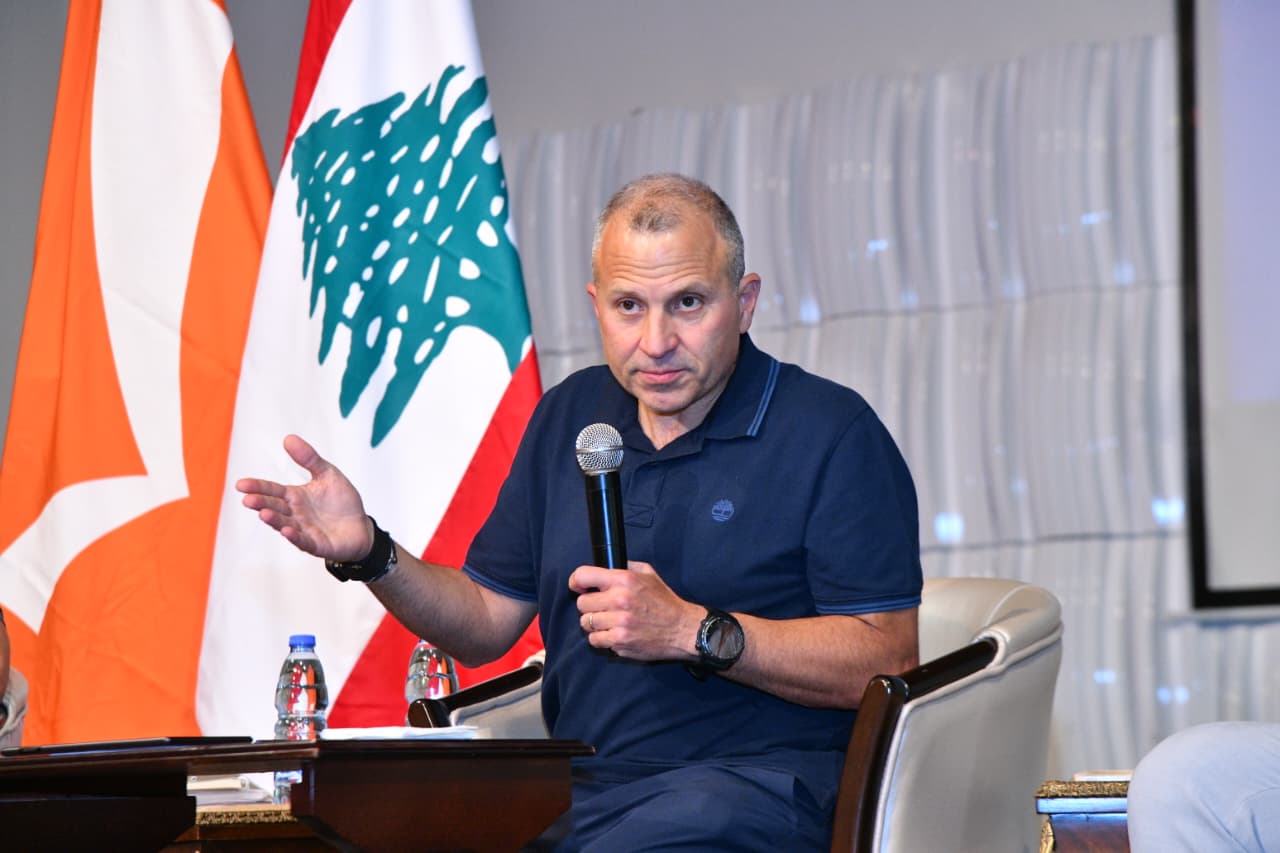
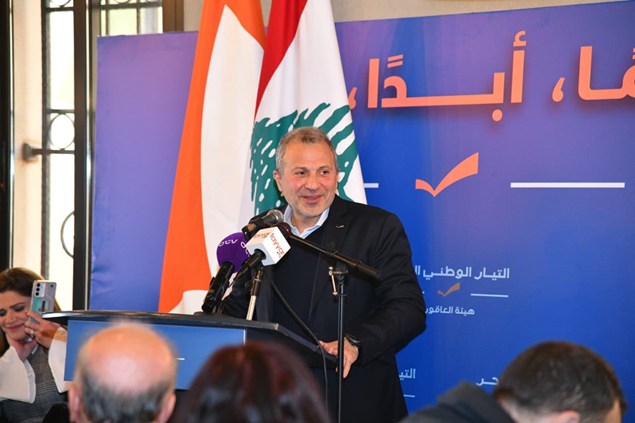
Bassil made these remarks during the 36th commemoration of October 13, 1990, attended by former President Michel Aoun, families of the October 13 martyrs, and longtime and newly enrolled FPM members.
During his speech, Bassil addressed the significance of October 13, 1990, and October 17, 2019, the responsibility of political forces for Lebanon’s successive crises, the government’s performance, exclusive state control over weapons, Syrian displacement, and political reform.
Bassil opened his remarks by welcoming former President Michel Aoun and paying tribute to the families of the October 13 martyrs, emphasizing that the occasion honors those who died defending Lebanon’s legitimate authority.
He recalled that Syrian occupation forces, in cooperation with the Lebanese authorities at the time and in coordination with armed militias, launched a military offensive on October 13 that brought down the legitimate authority represented by the Lebanese Army at Baabda Palace.
Bassil said the FPM emerged from the struggle for “freedom, sovereignty, and independence,” and continued its efforts to restore Lebanon’s sovereign decision-making despite the setbacks it faced.
He noted that some of those who participated in overthrowing legitimate authority in 1990 later returned to positions of power.
Turning to October 17, 2019, Bassil acknowledged that the protests began with genuine public anger and legitimate demands. However, he argued that political forces exploited that anger and transformed reform demands into a campaign to bring down the presidency rather than reform the political system and hold those responsible accountable.
He described October 13 as a “physical and military assassination” and October 17 as a “political assassination,” arguing that both experiences demonstrated the need to confront past mistakes rather than repeat them.
Bassil stressed that the FPM had opposed attempts to overthrow legitimate authority on both occasions.
“October 13 is not simply a commemoration. It is a lasting commitment to building the state,” he said, adding that the occasion belongs to Lebanon’s national history and is not the exclusive legacy of the FPM.
He also warned against allowing political disagreements to become national divisions, describing the Lebanese Army as an institution that protects all Lebanese and whose fallen soldiers sacrificed their lives for the entire country.
Honoring their sacrifices, he added, requires uniting the Lebanese people around the military institution.
Reflecting on the FPM’s record in government, Bassil outlined projects and plans the party had proposed in telecommunications, energy, water management, oil and gas, the economy, the environment, and public finance.
He highlighted the FPM’s electricity plan, which aimed to provide power around the clock, alongside projects involving natural gas, renewable energy, water resource management, dam construction, and oil and gas infrastructure.
Bassil accused the FPM’s political opponents of obstructing several of these projects and subsequently blaming the party for crises resulting from their non-implementation.
He also criticized government policies related to telecommunications, private generators, and fuel, arguing that they had imposed additional financial burdens on Lebanese citizens.
On financial matters, Bassil said the FPM had proposed measures to regulate capital movements and recover funds transferred abroad, accusing political and financial interests of obstructing these reforms.
Addressing the FPM’s role in opposition, Bassil stressed that the party was not seeking to overthrow the government or obstruct its work, but rather to monitor its performance, hold it accountable, and push for corrective measures.
He said the FPM had submitted 53 parliamentary questions to the government and received 30 responses, identified 64 violations of the government’s policy statement, filed three cases before the State Council and 11 challenges before the Constitutional Council, and submitted more than 82 legislative proposals to Parliament.
Bassil described the FPM’s approach to opposition as one based on “oversight, accountability, and alternatives,” rather than insults or obstruction, emphasizing that opposing government policies does not mean opposing the state.
“We reject attempts to overthrow legitimate state institutions through chaos or violence in the streets, and we call on those in power to seek consensus rather than confrontation. At the same time, we reject any attempt by the authorities to shield themselves from opposition scrutiny under the pretext of defending legitimacy,” Bassil said.
He added that the authorities could not use domestic weapons issues and the war abroad as an excuse to ignore what he described as threats to Lebanon’s identity.
Bassil accused the authorities of misleading the public about what he described as the presence of more than two million displaced Syrians in Lebanon and a non-Lebanese population exceeding 45% of the country’s residents.
Despite the FPM’s differences with the government, Bassil reaffirmed the party’s support for national dialogue and consensus on major issues, particularly security, sovereignty, and economic reform.
On the issue of weapons, Bassil reiterated the FPM’s commitment to exclusive state control over arms but criticized the government’s handling of the matter, arguing that issuing decisions was insufficient without the necessary conditions and capabilities to implement them.
He explained that the disagreement was not over the principle of exclusive state control over weapons, but rather over the mechanisms for implementing it.
Bassil warned that poorly planned measures could generate internal tensions without achieving the intended objectives.
He called on the government to establish a clear, phased roadmap backed by concrete guarantees, linking Israeli withdrawal, Lebanon’s protection, the strengthening of the Lebanese Army and the definition of its role, the implementation of exclusive state control over weapons, reconstruction, and the return of residents to their homes.
Bassil emphasized that continued Israeli occupation could not justify keeping weapons outside state control, just as the demand for the state’s exclusive authority over arms and the use of force could not justify continued occupation.
He acknowledged that the FPM and Hezbollah had a “fundamental disagreement” over weapons and political decision-making, but stressed that such differences did not justify hostile rhetoric, exclusion, or disregard for people’s sacrifices and the lives lost.
Bassil rejected turning the weapons issue into an internal Lebanese conflict, insisting that dialogue remained the appropriate path toward resolving national disagreements.
On foreign policy, Bassil called for an approach that safeguards Lebanon’s independent decision-making and keeps the country out of regional conflicts.
He stressed that Lebanon should not be aligned with any regional axis, but should instead remain open to its Arab surroundings and the wider international community.
Bassil called for good relations with Arab and Gulf countries, special relations with Syria, relations based on mutual respect with Iran, and openness toward the United States, France, and other countries.
He argued that Lebanon should become a partner in investment, energy, technology, and economic cooperation, and a center for dialogue and cultural diversity, rather than remain a battleground for regional wars and conflicts.
Bassil emphasized that sovereignty extends beyond borders and weapons to include political, economic, and financial independence, as well as the state’s ability to create employment opportunities and protect its citizens from being forced to emigrate.
Turning to Syrian displacement, Bassil criticized the government’s handling of the issue, arguing that the continued presence of large numbers of displaced Syrians posed challenges to Lebanon’s identity, demographic balance, and institutional capacity.
He also criticized the decision to enroll additional Syrian students in Lebanese schools at a time when Lebanese students and families were facing serious educational and financial difficulties.
Bassil called on the government to take practical measures to address Syrian displacement rather than limiting its response to statements and declarations.
Addressing young people, Bassil warned that one of Lebanon’s greatest dangers was not only the recurrence of crises, but also the possibility that Lebanese citizens would become accustomed to loss and gradually lose their willingness to resist injustice and corruption.
He urged younger generations not to relive the struggles of the past in the same way, but to learn from previous experiences and work toward building a better future.
Bassil announced that 1,211 new members had joined the FPM as part of this year’s October 13 commemoration, with 45% of them under the age of 35.
He said the figures reflected the party’s continuity and its ability to attract younger generations.
Bassil encouraged young people to become involved in public affairs, politics, and administration, and to move from slogans to practical projects and from competition over political positions to competition over tangible achievements.
He concluded by emphasizing Lebanon’s need for a modern state based on competence, partnership, and diversity, one that protects freedoms and creates employment opportunities.
Bassil stressed that October 13 should remain a source of inspiration for continuing the struggle to build such a state.
Joint Christian-Muslim Prayer and Tributes from Martyrs’ Families and New Youth Members
The October 13 commemoration also featured a joint Christian-Muslim prayer led by Christian and Muslim religious figures, reaffirming national unity and honoring the sacrifices of the martyrs.
Retired Brigadier General Said al-Roz described October 13 as a defining moment and an honorable battle fought courageously in defense of Lebanon, freedom, and sovereignty.
“It was a dark day when those who claimed to defend sovereignty celebrated what they called a victory,” he said.
George al-Alam, brother of martyr Milad al-Alam, expressed hope that Lebanon would prove worthy of the sacrifices made by its fallen.
“We hope Lebanon will live up to the sacrifices of our martyrs. The flame will never go out, because it is fueled by faith and will remain alive no matter how fierce the storms,” he said.
Speaking on behalf of the FPM’s newly enrolled young members, Joe Khalil pledged to continue the struggle and preserve the legacy entrusted to the younger generation.
Addressing longtime FPM activists, he said: “Without your sacrifices, we would not be here.”
Khalil stressed that young people aspired to a country where they could find employment and live with dignity without being forced to emigrate, adding that joining the FPM was a responsibility requiring initiative and action.
For her part, Chloe Khoury, speaking on behalf of the FPM Youth Sector, emphasized the duty of the younger generation to preserve that legacy and not allow difficulties to weaken its faith in Lebanon.
She pledged before the martyrs, their families, and longtime activists that young members would prove worthy of the trust and responsibility placed in them.
Rahaf al-Bawari, head of the FPM Women’s Committee in Baalbek-Hermel District, reaffirmed her commitment to Greater Lebanon and to preserving its unity and identity.
She stressed that this historical responsibility required confronting sectarian strife and attempts at exclusion.












 EXCLUSIVE
 EXCLUSIVE