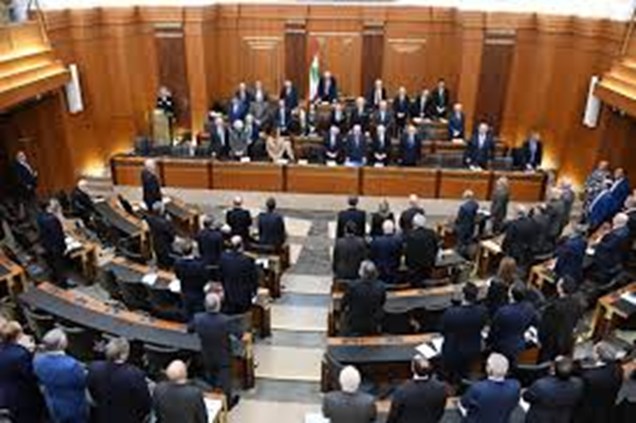
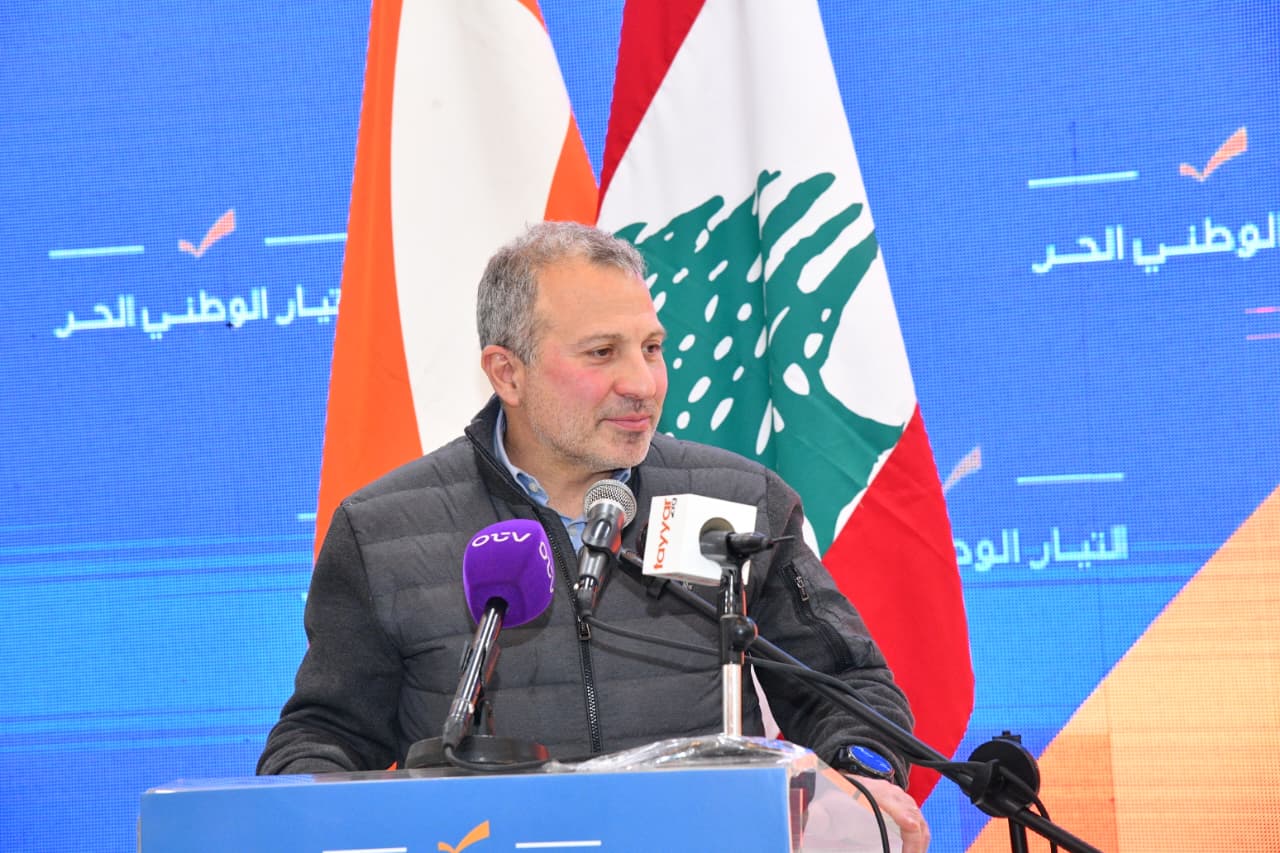
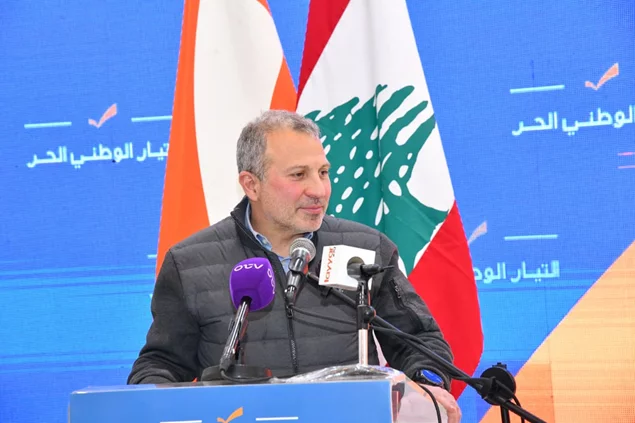
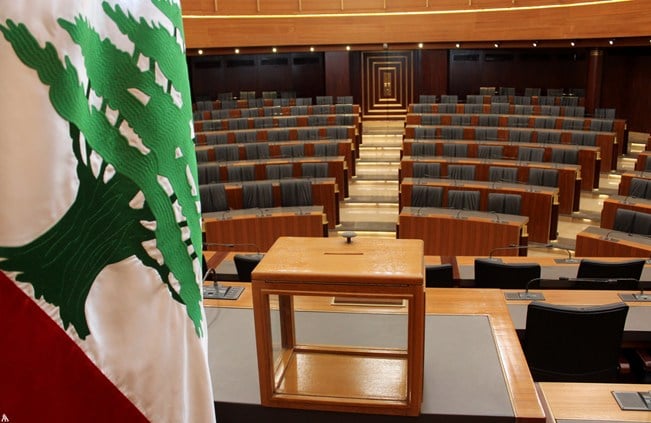
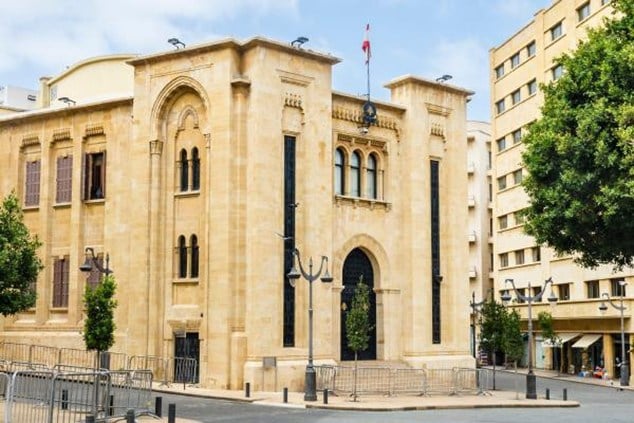
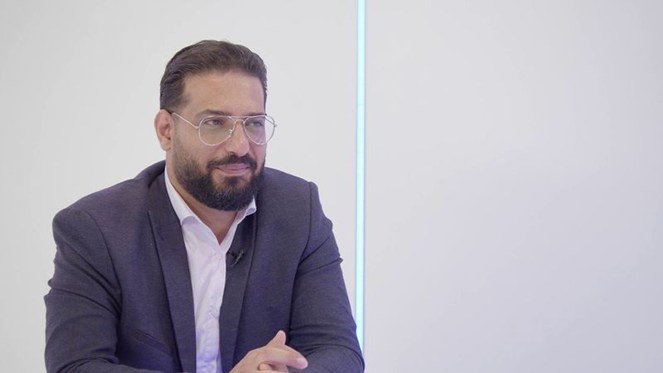
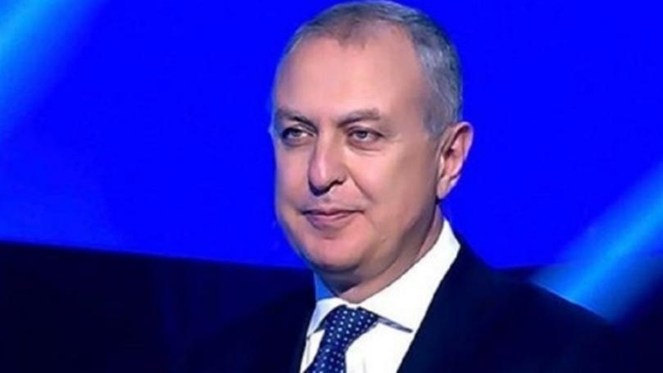
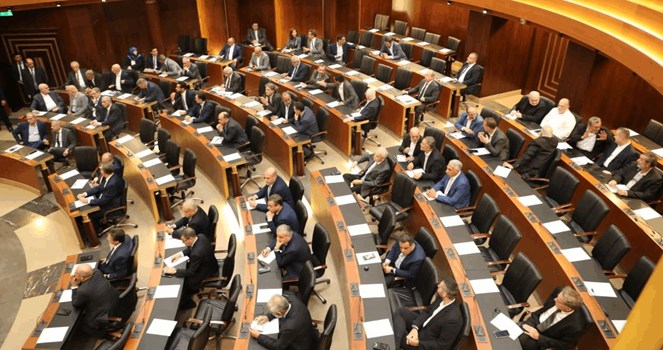
Free Patriotic Movement leader MP Gebran Bassil, speaking in Parliament during a session devoted to questioning the government, addressed the Prime Minister, saying: “Your government is a government of axes, a government of strife, a government of surrender, a government of darkness, a government of taxes, a government of generators, and a government of withheld deposits. It is a government of promises without results, a government of neither reform nor recovery. It could aptly be described as ‘rescue from reform.’”
He said: “If you want to compare, then dare to compare: plans with plans, projects with projects, and results with results. Compare what we accomplished with what you failed to accomplish, our plans with the absence of your plans, and tell the Lebanese people: What have you done? What are your projects? What has changed in people’s lives? And if you are unable to govern, then do not ask the Lebanese people to continue paying the price for your remaining in power.”
He added: “You promised neutrality, but you became a government of axes. You promised sovereignty, but you became a government of submission to external powers. Neutrality does not mean replacing one axis with another, and sovereignty does not mean replacing one guardian with another. You promised to protect civil peace, but you opened the door to strife, once over the weapons issue and once over the amnesty issue. You promised to establish the state’s exclusive authority over weapons. Where is it? And instead of turning this into a project of national consensus, you entrusted the occupation with the task. You promised reform, so where is it? Reform is not about wishes, but results. There is no plan and no program, only promises without results.”
Our Previous Participation in Government Does Not Strip Us of Our Right to Oppose
Bassil said: “Our meeting today in a session to question the government stems from democratic principles and the proper rules of oversight and opposition. The Rules of Procedure stipulate that a questioning session be held every three legislative sessions, yet five sessions have passed. We, as opposition MPs, have also submitted three letters and requests in this regard, based on the principle that Parliament’s role is to oversee and hold the government accountable, not merely to legislate.”
He added: “There is no need for fantasies or conspiracy theories. We are a responsible opposition, and we know what the country’s circumstances allow.”
Bassil stressed that “our previous participation in government does not strip us of our right to oppose later,” saying: “Some want to invent a strange exception whereby anyone who once participated in government is deprived of the right to criticize and question it. This is a shortsighted view that turns opposition into an oddity that may only be practiced by those who have remained outside the institutions.”
He continued: “For years, a narrative was built against the Movement, accusing it of corruption, mismanagement and an understanding with Hezbollah. On corruption, you have been in power for 19 months and have been investigating, and the files are in your hands. If you have evidence, take it to the judiciary. As for mismanagement, present your projects to the people and show them your achievements. As for the understanding with Hezbollah, you are its partners in power today, sharing appointments and quotas with it, and you bear, along with it, responsibility for the government’s failure.”
He added: “The conclusion is that a government incapable of defending its achievements needs an adversary to talk about whenever others talk about its failures.”
Bassil noted that “as soon as the questioning of the government was announced, voices rose from within it, preemptively outbidding one another in substantive criticism, after some government factions had initially portrayed it as representing the end of one phase and the beginning of another, and themselves as a sovereignist camp whose axis had prevailed and reached power, as though they had never been in power before. They also regaled us with talk of the government’s integrity and solidarity.”
He asked: “If factions within the government are attacking it, even if for populist reasons, why is this right denied to the genuine opposition? Your revolt is populist and comes from within the government. Either change things from within or leave it, but you can no longer say: ‘They did not let us work.’ The balance of power has changed, so why do you still invoke the deep state? You have an exceptional opportunity and exceptional support, so accomplish something.”
“Rescue from Reform”
Bassil stressed: “Our words are responsible, not populist. We will present facts, not slogans, and we will hold you accountable according to your ministerial statement, which was entitled ‘Reform and Recovery.’ Show me where the reform is and whom you have rescued. Your name has become: ‘rescue from reform.’”
He said: “You violated your ministerial statement in 56 instances, and we have a list of them. This is our judgment of you. You are a government that has not merely made mistakes in individual files; you have taken the wrong direction.”
He revealed that the parliamentary bloc “submitted 50 questions to the government and received only 14 answers, which contained rhetorical language and statements of intent. Whenever some of them included figures or facts, they were contradictory or incorrect.”
He added: “The government’s answers alone are enough to demonstrate its inability. We turned 28 of these questions into interpellations covering ten areas: finance and the economy; foreign affairs and expatriates; justice and the judiciary; energy and water; displaced persons; education; appointments; weapons; the Taif Agreement and decentralization; and various other files.”
Bassil said MPs from the bloc would present some of these interpellations and asked that they be given the necessary time pursuant to Article 73 of the Rules of Procedure. He said he would address “the dangers caused by the government as a result of its failure to make any effort regarding a defense strategy, implementation of the Taif Agreement, and reform,” which he said had worsened on three levels: “military dangers, security dangers, and social and livelihood dangers.”
External Military Dangers
Bassil said the government “took office amid a state of war and an agreement to cease hostilities between Israel and Hezbollah, which is certainly much better than the framework agreement you adopted, at least because it is based on UN Security Council Resolutions 1701 and 1559.”
He added: “Israel does not respect any agreement, and Hezbollah has no intention of handing over its weapons. You obtained Parliament’s confidence on the basis of commitments, and you promised in your ministerial statement to establish a national security strategy to implement the state’s exclusive authority over weapons and national decision-making. We support you on this. But you have not prepared a single draft, formed a single committee, or held a single meeting.”
He continued: “Instead, you approved a paper that came to you from abroad, and it amounted to a declaration that Lebanon was entering an axis and abandoning its policy of neutrality. You also adopted government decisions on the state’s exclusive authority over weapons, and we support them provided they are implemented through an internal process and without an internal war.”
He added: “You took decisions and failed to implement them, as happened in the case of the Iranian ambassador. This reflects an inability to assert the authority and prestige of the state. And instead of compensating for this by adopting a national security strategy, you concluded a security coordination agreement with Israel providing for disarmament by force without securing an Israeli withdrawal. Israel instead viewed it as a cover and a mandate to carry out the task, given the Lebanese Army’s inability to do so.”
Bassil said: “We support negotiations with Israel to stop the war, and the format of the negotiations should have been a card Lebanon could use to obtain something in return. We support negotiations because Hezbollah’s weapons are no longer capable of stopping the war and protecting Lebanon, but we want negotiations to stop the war, not to provide cover for its continuation.”
He continued: “We support any agreement with Israel that serves Lebanon’s interests in terms of sovereignty and rights. We support the Armistice Agreement, and a new agreement that moves us toward a state of non-aggression, eventually leading to a peace agreement. This is what we have said since 2017.”
He added: “We want peace, not surrender; the peace of patriots, not the submissive; the peace of the brave, not the peace of cowards. Today, we are facing a new population transfer.”
Bassil explained that “our oversight duty as MPs prompted us to ask about a secret security annex to the agreement, which complements it. We have the right to see it because it entails obligations for the Lebanese state and consequences on Lebanese territory.”
He said: “Our position is positive, out of a desire to strengthen Lebanon’s position, and you can benefit from our position, but it remains subject to reservation until we officially obtain the annex. We therefore sent a letter to the Speaker of Parliament containing a question and a request that the government provide us with an official copy, so that we can base our position on its contents and determine whether it requires Parliament’s approval. This is particularly important because we have the duly approved Armistice Agreement, based on a UN resolution and adopted by our constitutional institutions, as well as international resolutions that must not be relinquished. Nor should we depart from the Arab Peace Initiative or abandon the support of friendly countries.”
The War Against Lebanon Continues
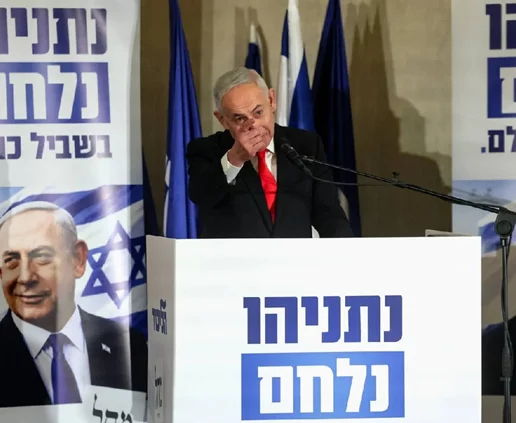
Bassil said: “At this time, the war against Lebanon continues, and Netanyahu’s elections are helping it continue without any deterrent, while Hezbollah is unable to stop it.”
Addressing Hezbollah, he said: “It must ask itself how we can stop further destruction and occupation, and whether the hills of Ali al-Taher were not enough to provide the answer, with the need to hand them over to the Lebanese Army instead of now pleading with the Lebanese state to take them over.”
He also addressed the Lebanese state, saying: “National dignity must be preserved without further submission to the occupation. Do you not find it shameful even to entertain the idea of handing Israel the remains of Lebanese Jewish citizens who were killed during the Lebanese Civil War? Lebanon is a country of pluralism, and the Jewish community is one of its components. It is not permissible to treat it as though it were an Israeli faction.”
He referred to “our interest in restoring the Abu Jamil Synagogue and our follow-up, when we were at the Foreign Ministry in 2018, on the issue of protecting land in Sidon containing 303 Jewish graves,” stressing that “the sanctity of the dead and the inviolability of their remains must not be violated.”
Three Warnings to the Government
Bassil said: “I want to issue a clear warning, while also sending a coded message, to the government on three issues.”
First: “We fully support the state’s exclusive authority over weapons after Hezbollah’s failure to defend Lebanon. But disarmament through seeking support from abroad is neither permissible nor will it succeed. The lessons of history are well known: beware of seeking support from abroad, beware of humiliation, and beware of sacrificing an essential component. You will not succeed. Change course and move toward a national security strategy.”
Second: “We support maintaining the best possible relations with the Gulf while not severing relations with Iran. Beware of entering the Gulf-Iranian conflict, otherwise Lebanon will become a sacrificial pawn in this conflict.”
He added: “Iran uses us as an arena, and the Gulf will not pay the price of destroying Hezbollah if Washington and Israel do not complete the mission. Nor will it blow up a de-escalation process with Tehran because of a country that could be crossed off their calculations and excluded from any bargaining because of the state’s inability and failure to fulfill its commitments. At that point, we will be treated as collateral damage, because we are not more important than the Strait of Hormuz, the outbreak of a regional war, or their countries’ budgets.”
Third: “We support the best possible relations with Syria, but beware of dealing with it as a new guardian over Lebanon.”
He said: “The US president repeatedly offered the Syrian president the opportunity to intervene in Lebanon, and Republicans have traditionally handed Lebanon over to Syria. God has been kind so far in that the Syrians refused, and there are people in the region helping to maintain that position, but how long will the refusal continue? Build sound relations with Syria, based on equality, from now on.”
Dangers of Internal Strife
On Syria, Bassil stressed that the issue must be “approached from a national, not sectarian, perspective, regardless of who rules Syria, because it is in the interest of all Lebanese to have good relations with it. This is a lesson from history.”
He added: “The Syrian regime should not be an extension of any sect in Lebanon, nor should any sect in Lebanon be an extension of the Syrian regime. This is a national interest, and this is how government policy should be conducted. Otherwise, the Syrian issue will become a cause of internal division in Lebanon.”
He said relations “must be sound and based on equality. Syria’s demands should be understood if they are legitimate, but the Syrians must also understand our demands.”
Bassil criticized what he described as the government’s inability to address the issue of displaced Syrians, saying: “The government is telling the truth when it says that its plan for the return of Syrians has resulted in only 30,000 returning, and it is lying when it says that 87 percent of Syrians have returned. Figures issued by statistical institutions and by an official Lebanese institution confirm that their number exceeds two million. You must have a policy for their return, indeed a plan for Lebanese participation in the reconstruction of Syria.”
Addressing the Prime Minister, he said: “You cannot issue instructions facilitating the entry of Syrians without documents. The principle of reciprocity and you, as a veteran diplomat, know this is a fundamental principle in relations between states. Even if it is sometimes breached because of differences in the size and interests of states, it must not be completely overturned.”
Amnesty Law and Detainees
Bassil said: “The absence of this principle led you to hand over detainees in Lebanon to Syria without receiving anything in return, and caused a problem with the amnesty law, which took on a sectarian character. Each group came to have its own demand: Sunnis want the Islamist detainees, Shiites want drug dealers, and some Christians want those who were deported to Israel. Is this how matters are handled?”
He added that the issue “could have been resolved through the law we submitted in December 2025, which sets a maximum detention period of two years without trial for those accused of terrorism offenses. At that point, all Islamists who had been wrongfully detained would have been released.”
He continued: “You turned the issue into a sectarian matter and falsely accused us of opposing their release, even though you know from our internal discussions that we oppose only the exemption of criminals. And you promised, Minister of Justice, to open all the files, only to close them all.”
He said: “You dragged the judiciary into a problem with an unreadable law that cannot be implemented as it stands. Go ahead, before all the Lebanese: let us release those who have been wronged, except for those who killed members of the Army, through a limited amnesty law covering everyone who has not been tried, and punish every judge who leaves a detainee for two years without trial. Then all judges will complete their cases within the necessary timeframe, while we simultaneously address prison overcrowding and human rights.”
He stressed: “No one can put the Army in confrontation with the Sunnis, because they are its human reservoir. The Army’s problem is with anyone who attacks it, regardless of their sect, and those who attacked it came from different sects in Lebanon.”
He added: “And do not put the Army in confrontation with the Shiites. This is a political problem that the government must resolve through political consensus, after which the Army can implement the decision. Otherwise, we will be facing internal strife.”
Taif, Decentralization and Partnership
Bassil stressed that “preventing internal division also requires implementing the Taif Agreement,” asking the government: “You promised to achieve decentralization. Have you held even a single meeting on this issue? Certainly not.”
He asked: “What have you done about balance in the public administration? Everyone knows about the underrepresentation of Christians in the administration, and through your appointments you are contributing to increasing it instead of addressing it. During our time, Christian participation in the administration rose from 24.5 percent to 35.5 percent, and today it has declined again. And you are not signing the decrees restoring citizenship.”
He added: “What have you done about partnership in governance? You formed a government on the basis that it was a technocratic government with no political parties represented in it, but in the end, the shares of all the parties emerged, except for the Christian parties, which found themselves without representation.”
He continued: “Today, we hear one of its ministers saying that we are Category B, another saying Category C, and a third whom you have turned into an administrative director in a sovereign ministry such as the Foreign Ministry, while treating his presence at the United Nations as though it were a favor to him. The United Nations is the Foreign Minister’s arena; he is the permanent presence there, while the President of the Republic or the Prime Minister are seasonal visitors. The Foreign Minister is a partner in shaping foreign policy, not an administrative executor within the ministry, regardless of his shortcomings in carrying out his duties.”
He said: “The Syrians and some Lebanese were responsible for the frustration and marginalization of Christians between 1990 and 2005. Today, some Christians in power are behind this marginalization because they accept it.”
Bassil noted that the Movement “prepared a paper to protect Lebanon from any internal strife by strengthening its internal unity. We conducted a tour that began with the President of the Republic and the Prime Minister, and called for serious dialogue among the Lebanese over a Lebanese proposal that would place decision-making and weapons exclusively in the hands of the state, while at the same time preserving sovereignty and protecting Lebanon. But you refused.”
Social and Livelihood Dangers
Bassil said: “Countries at war adopt a wartime economy and put policies in place to ensure their people’s resilience. But the government’s policy here is to undermine people’s resilience through taxes.”
He added: “The easy solution for this government is the citizen’s pocket. Whenever you need revenue, you impose a tax; whenever you fail to solve a problem, you impose a fee; whenever you fail to generate money, you take it from the people. This is the government of taxes, and it is even stumbling in the way it imposes them.”
He asked: “How many times have you drafted the waste decree? Three times? We will challenge it because it violates the law. And how many times have you collected taxes under the pretext of paying the dues of retirees and military personnel, only for them to go back on strike? Where is the money going?”
He added: “The price of a gasoline canister rose from around $14 or $15 during our time to $29.5 today, even though global oil prices were higher during our time.”
Depositors’ Funds and Electricity
Bassil asked: “Where is the depositors’ money? Do not shift responsibility onto Parliament. You have the majority supporting you, so pass the law. Where is the law to recover funds transferred abroad, as well as embezzled and stolen funds? You promised to complete the forensic audit at Banque du Liban. Where does it stand?”
He added: “You went ahead with a forensic audit into the power-ship file! We are pleased with the audit because we will see where it leads you, and you will reveal the truth to the people. The judiciary has already had its say in the power-ship file, but you want to justify your failure in electricity by blaming us and opening files to distract people.”
Addressing Energy and Water Minister Joe Saddi, Bassil said: “You have been an adviser all your life and you do not know the difference? The power ships are cheaper. You are lying to people when you tell them that you are saving them money. If you buy electricity from the power ships, you save the Treasury $360 million today.”
He continued: “In electricity, you inherited from Minister Walid Fayad an electricity tariff that allows you to achieve financial balance without subsidizing electricity. But if you do not operate the power plants, how will you collect payments and generate revenue?”
He added: “You are deliberately pursuing a policy of breaking and bankrupting the state electricity utility so that you can divide Lebanon into regions for electricity production and establish large generators. You are imposing an additional $3 billion a year in living costs on citizens. This is an attack on the economy and an impoverishment of the people.”
He continued: “This is the government of darkness, stealing money from people’s pockets for the benefit of generator owners. Every kilowatt-hour that you fail to provide from the power plants costs citizens 55 cents instead of 27 cents nearly double. Whose interests does this policy serve? And then you want to cut people off from the sun with the decision you took regarding solar panels. And if you have reversed it, Mr. Prime Minister, that is further evidence of confusion and of the electricity regulatory authority’s failure to perform its role because of the law and the confusion over powers.”
On water, he said: “Two budgets have passed, and the minister has millions of dollars but does not spend them on dams, saying that he is studying them with an international committee. He must be held accountable for dereliction of duty. He has budgets that he does not spend because of political score-settling, so that it cannot be said that he is completing dams that we started. Here too, a forensic audit is needed to justify the failure to implement.”
On oil, Bassil said: “In exploration and geological surveys, Lebanon’s gas rights were relinquished in favor of a foreign company for six years, without conditions or compensation. Why do you not begin onshore exploration? We submitted a bill for onshore exploration in 2014. The entire region is looking for exploration and supply locations away from straits and crossings because of the Hormuz crisis. Do something.”
The Budget and Crisis Management
Bassil said “the budget is proof that the government is managing the crisis rather than addressing it,” adding: “There is confusion in every sector. Where do we begin? Education? Lebanon’s students have never been subjected to what they are facing today. There is no project, plan or program in any sector.”
He continued: “There are no audited final accounts, no reform, no debt resolution, no solution to the financial gap, and no vision for investment and growth. You have kept the state as a machine for spending and collecting revenues and placed the burden on citizens through indirect taxes.”
Confidence in the Government
Bassil concluded by addressing the Prime Minister: “Mr. Prime Minister, the ministerial statement is not a literary text to be read on the day the government receives Parliament’s confidence. It is a contract between you, the MPs and the Lebanese people, and you have breached that contract.”
He concluded: “For our part, we reserve the right to call for a vote of no confidence at the end of the session, or not to do so, solely to expose the fake opposition within your own ranks.”













 EXCLUSIVE
 EXCLUSIVE
 EXCLUSIVE