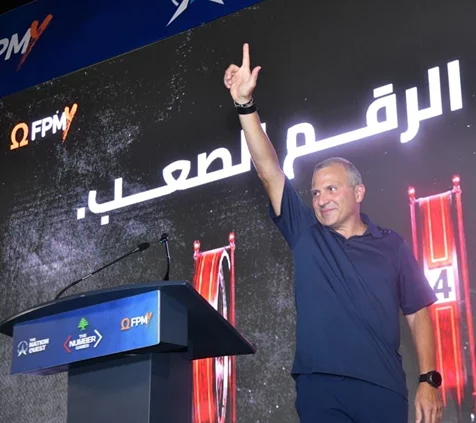
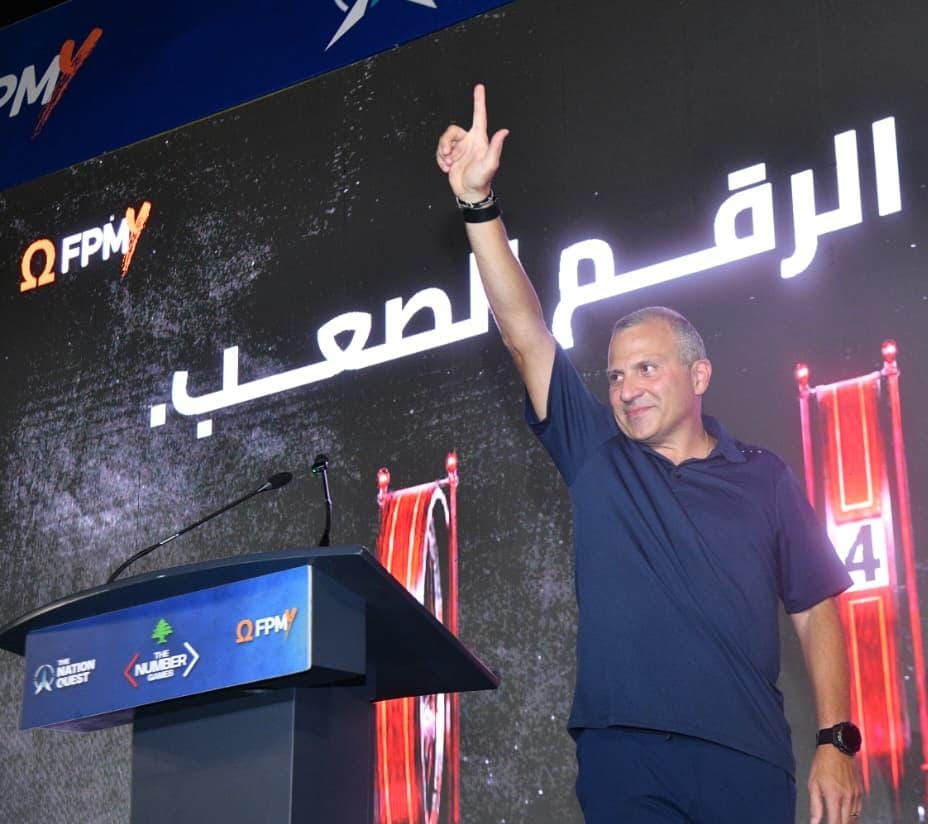
The Youth Sector of the Free Patriotic Movement (FPM) organized a rally in Batroun titled “The Nation Quest,” bringing together around 1,800 young men and women from various districts and universities across Lebanon.
Throughout the day, participants competed in a series of challenging games featuring historical and educational themes related to Lebanon, along with sporting activities.
The Kahhaleh team won first place overall, while the Jbeil district team ranked first among the districts, and the Lebanese University team came first among the universities.
At the conclusion of the event, Free Patriotic Movement President MP Gebran Bassil presented the winners with their prizes before addressing the young participants.
Speaking about Lebanon’s history, Bassil said: “This homeland has a history spanning thousands of years 6,000 years and it has been marked by crises throughout. Lebanon’s history has never been easy, nor has its path ever been straightforward. Lebanon has always experienced ups and downs, and every fifteen years we face a crisis. I do not want to go back as far as 1840 and 1860, but in our modern history, there was the revolution in 1958, the war in 1975, and in 1990, the end of the war and the beginning of the tutelage era.”
He continued: “In 2005 came the end of the tutelage, but also the beginning of a major national crisis, and in 2020 Lebanon was hit by its worst economic crisis. Yet throughout all these stages, Lebanon endured and carried on because there are people and young men and women like you who believe in it and refuse to abandon it. Even if they travel abroad or move away, they remain entrusted with Lebanon.”
Bassil explained: “Before Lebanon became ‘Greater Lebanon’ under Patriarch Saint Elias Al-Hoayek, it was a small country the Mutasarrifate. Instead of covering an area of 10,452 square kilometers, it covered 3,500 square kilometers. When Lebanon became Greater Lebanon, it expanded into a larger territory that offered better conditions for life. It was no longer limited to the mountain; the coast, the South and the Bekaa were added to it. It became a country with the elements necessary for life and one capable of fulfilling its mission the mission of a Lebanon that should not live on the margins and should not belong to one sect or one component alone.”
He continued: “Today, we in the Free Patriotic Movement, with members from the North to the South, the Bekaa and Beirut, constitute a truly Lebanese movement, with both Christians and Muslims. Therefore, you must see yourselves as part of a national movement, understand what Greater Lebanon means, and seek to preserve it.”
Bassil said: “The game we are playing is not a game of numbers; it is about one number. The only number the Free Patriotic Movement holds on to is 10,452 square kilometers, and our entire mission in the Movement is to preserve that number. Whatever we do in politics and national affairs, our goal is to preserve Lebanon’s 10,452 square kilometers.”
He added: “I want to tell you that Lebanon’s system is like a windmill, and a windmill is supposed to grind wheat to feed everyone. But sometimes, in this windmill, we ended up grinding one another and feeding no one. Unfortunately, at times an eastern wind came from Syria and pushed us, as a movement, to call for freedom, sovereignty and independence. Today, a western wind comes from the direction of Israel and infringes upon our sovereignty. Therefore, today as well, the Movement’s battle is one of freedom, sovereignty and independence.”
Addressing the youth, he said: “You, the youth of Lebanon, may distance yourselves from others, but you have no right, when Lebanon is attacked from Syria, to say that you want to drink tea in Syria, and when it is attacked by Israel, to say that you want to drink beer in Tel Aviv. As Lebanese youth, we drink coffee in Beirut and arak throughout Lebanon.”
Bassil stressed: “The phase in which you had to defend yourselves is over. Today, you are in a phase in which others must defend themselves against your accusations of collaboration and treason, because they engage in politics ‘on demand,’ whereas you work according to Lebanon’s national interests.”
He added: “Today, there is no need for you to defend your patriotism or your non-sectarianism. Those who criticized you over the electricity issue are today depriving the Lebanese of even a moment of light, forcing them to rely on private generators and shutting down power plants so that the Lebanese pay 55 cents instead of 27 cents for state electricity.”
He continued: “Those who deprive you of water today, despite having funds allocated for it in their budgets, and who stopped dam projects out of political spite simply because they were undertaken by the Movement, are depriving the Lebanese of water. And those who stopped oil and gas exploration by yielding to foreign powers are also depriving you of national wealth.”
Turning to foreign policy, Bassil said: “Anyone who does not know how to exercise sovereignty in a key ministry such as the Ministry of Foreign Affairs cannot lecture you about sovereignty. He should not wait for a president of the republic or a prime minister to take him along as part of a presidential delegation. Rather, he must assert himself through his role at the Ministry of Foreign Affairs and in international forums. He must travel the world and meet foreign ministers not be sunbathing at the ATCL while Lebanon is engulfed in flames, leaving the Foreign Ministry, the country and its foreign policy to the wind. This is what sovereignty means: it must be exercised in every sense of the word.”
He added: “Today, you stand as part of Lebanon’s patriotic opposition, speaking the truth and defending the rights of the Lebanese even when you are not in power. We build; we do not destroy, and we do not obstruct plans that are good for Lebanon. Even when we are in opposition, if someone proposes bad plans, we help correct them so that those in power can act in the best interests of the Lebanese.”
Referring to the commemoration of the martyrs of the Lebanese Resistance, Bassil said: “Today, as we are here, the martyrs of the Lebanese Resistance are being commemorated. They are being commemorated by people with whom we disagree politically, but we acknowledge that their martyrs fell for Lebanon’s sovereignty and independence. Therefore, we honor all martyrs and every martyr who fell for Lebanon.”
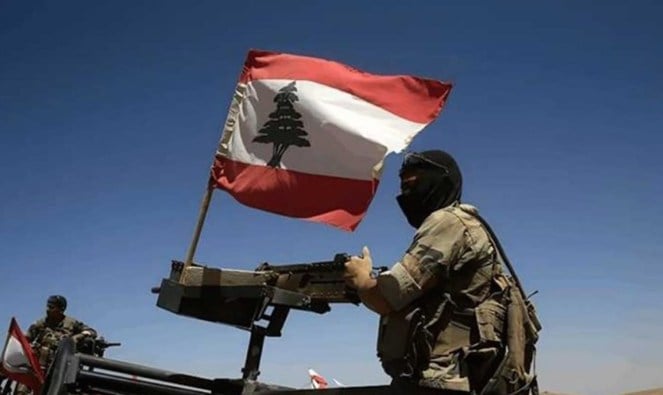
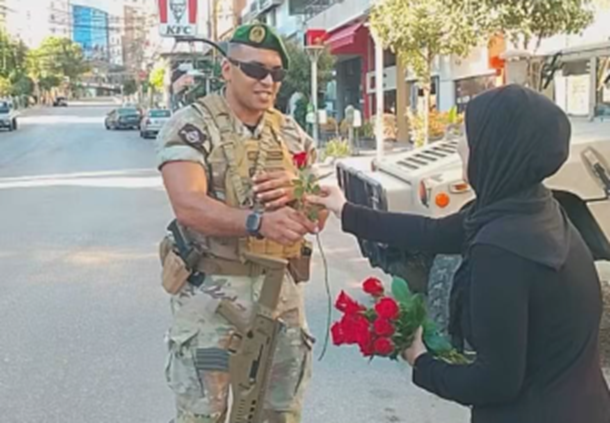
He added: “The Lebanese Army’s martyrs belong to all of Lebanon, and they were betrayed when the amnesty law was passed because it pardoned those who killed members of the army. This is why the Movement is the movement of sovereignty, legitimacy and the Lebanese Army.”
He stressed: “The army belongs to all of Lebanon, not to one sect, and therefore we must preserve it. The areas they call the periphery are the heart of Lebanon. The homeland is not a hotel; its beauty lies in the struggle to build it. We are the ‘Aoun Generation,’ and you are the generation of struggle, raised on the values of General Michel Aoun, who taught us to love Lebanon.”
Bassil said: “You came to Batroun to discover Batroun and learn about Lebanon’s history. The first thing that made me happy today was seeing how you competed, and I am proud to lead a movement whose young men and women are like you.”
He noted: “Getting to know Batroun is easy because you walked through its streets, mingled with its people and enjoyed yourselves there. I hope we can all discover every city and town in Lebanon because they are all beautiful, and in each one we will discover something beautiful and new.”
Bassil pointed out that it is not easy for a person to continue living in a country facing so many difficulties and remain committed to it. “That is why I believe the experience you had today carries many meanings and many lessons. It is true that you had a good time, but you should also have learned a great deal.”
He said: “Every challenge must be approached with a willingness to accept both victory and defeat. We are among those who believe that defeat makes us stronger and motivates us rather than weakens us. We have experienced many defeats throughout our history and we will experience others, but we have also achieved many victories. And I tell you: after every defeat, the Free Patriotic Movement rises again and triumphs. Your faith and confidence must never be shaken.”
He added: “We must learn to accept defeat in a positive spirit. I know how many of you came here full of enthusiasm, and I congratulate those who took on this major challenge.”
Bassil continued: “In life, sometimes a person does everything right but is simply unlucky, and all of you must have gone through situations in which you did things successfully. In the Movement, we entered ministries and worked in them, and we believed that we had done everything possible to fulfill the hopes and aspirations of the people, yet we did not succeed not because of us, but because of bad luck and because of others who prevented the Lebanese from benefiting from that success.”
Addressing corruption, he said: “We also live in a country where corruption is widespread, and through culture and habits it can become normalized within society. Today, some believed they could get away with it, but when there is fair judgment, that person loses. Among you were participants who exceeded the maximum number of points that any team could possibly obtain if it completed everything correctly without receiving any penalty card, and those participants were disqualified by the judging committee.”
He stressed: “Had the Youth and Students Sector accepted that someone could exceed the maximum number of achievable points, and had the Youth Committee confirmed that person’s victory, this would no longer be a sector of the Free Patriotic Movement; it would become a sector belonging to one of Lebanon’s corrupt parties.”
Bassil said: “I want to speak to you about the future we want to build together. The title of our gathering is ‘The Nation Quest’ the pursuit of a homeland, something that goes beyond simply building a state. In the Movement, we continue to speak about building the state, but today the broader objective is to build a homeland in the fullest sense of the word, within which there is a state that protects the individual through its laws.”
He continued: “You have certainly discovered that no individual can achieve this alone. Even if one person went through every stage and completed every challenge, you can see that we live in a country where we must all cooperate with one another in order to succeed.”
Youth Sector Coordinator
Free Patriotic Movement Youth Sector Coordinator Elio Haddad also addressed the participants, stressing that preserving Lebanon’s history is a duty and that Lebanon has always risen from its crises because there have always been people who held on to its institutions and to every last inch of its territory.
He said: “We came from all across Lebanon, and these 10,452 square kilometers represent the boundaries of our sovereign spirit. We are here to say with one voice: too big to be swallowed, too small to be divided.”
He concluded: “Our martyrs did not die defending a share; they died defending Lebanon and its 10,452 square kilometers.”











.png)
.png)
.png)
 EXCLUSIVE

.jpg)

.webp)
.webp)
.webp)
.webp)