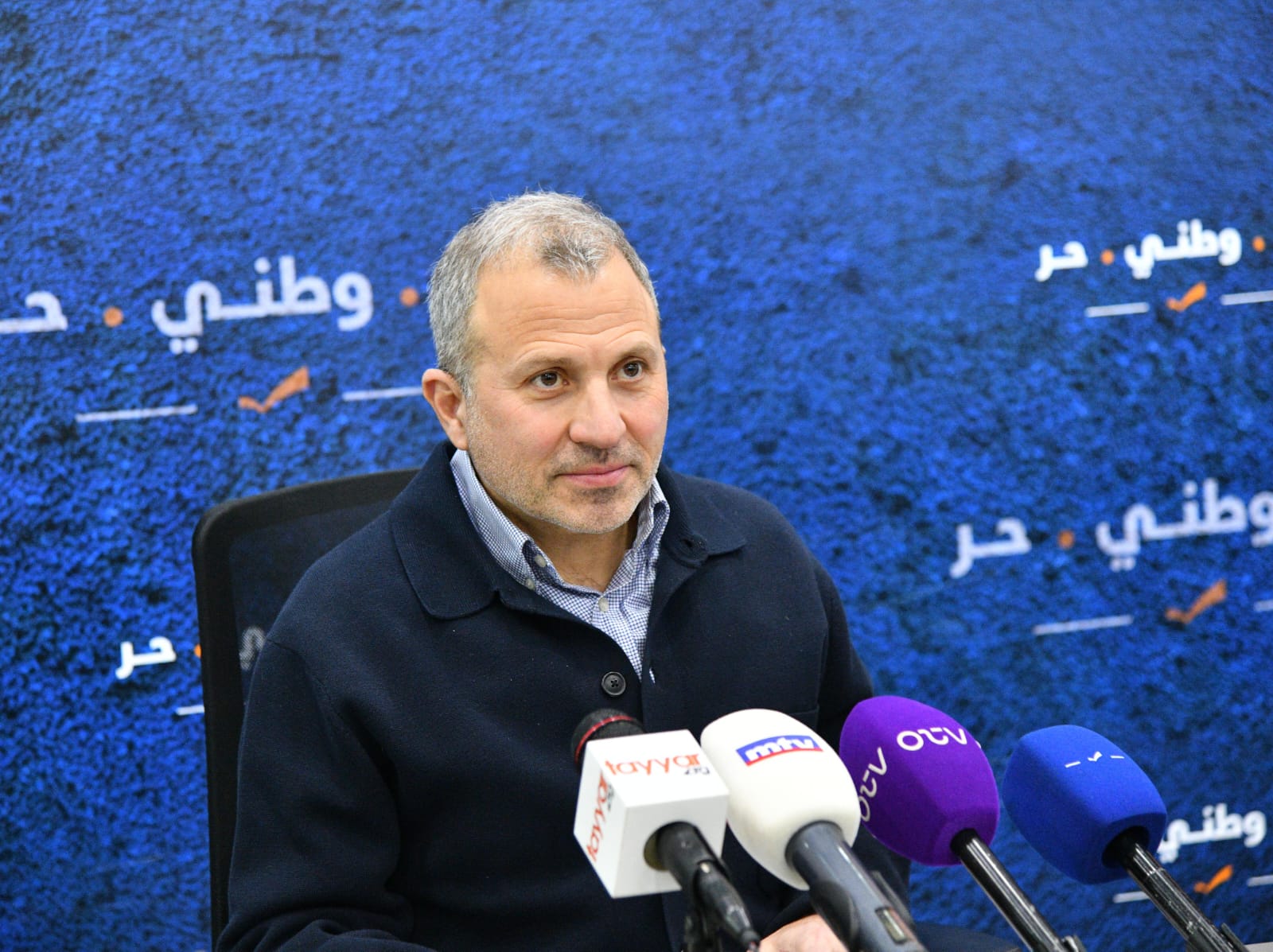
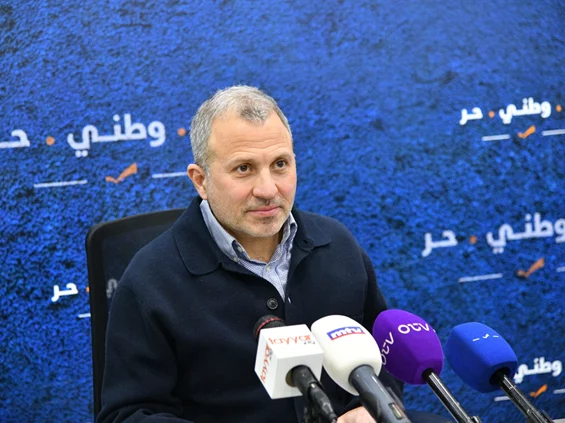
President of the Free Patriotic Movement (FPM) MP Gebran Bassil condemned the ongoing Israeli war and occupation of Lebanon.
He also condemned the violation of states’ sovereignty and the security of their citizens, and the political assassination of spiritual authorities whose symbolic standing matters deeply to their communities of believers.
“Israel attacking Iran is something we are used to, even if it falls outside international law, because an enemy is attacking an enemy. But Iran violating the sovereignty of Gulf states is condemnable and unacceptable. We stand in solidarity with them. They are sisterly and friendly states; their security is part of Lebanon’s security, their prosperity part of Lebanon’s prosperity, and attacking them is rejected under any pretext,” he said.
Following a meeting of the FPM Political Council, he stressed that Lebanon was part of the Arab League and that his position had never been otherwise. He also recalled that, during his tenure as foreign minister, he had never voted except in favor of the item addressing Iranian interventions.
He added that Israel had never needed a pretext to attack Lebanon, but said that, at this particular moment, one had effectively been handed to it, “through the Iranian door, not the Lebanese one.”
He argued that they had stayed silent for fifteen months without responding to Israel, yet could not wait a single day to respond to what Iran was subjected to.
In that context, he said, providing Israel with such a pretext amounted to a crime, first against their constituency, and second against the nation.
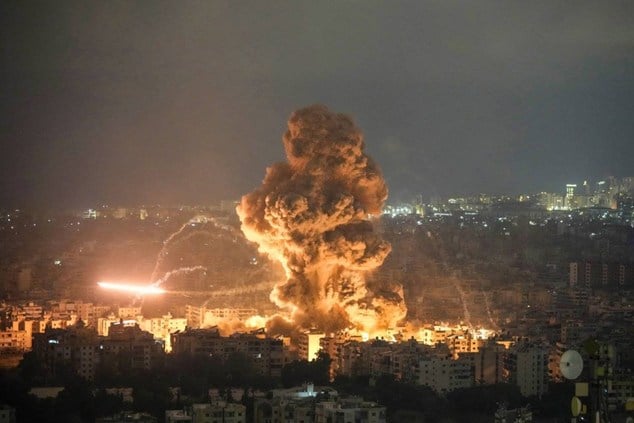
According to Bassil, Lebanon had once again been drawn into a war that did not serve its interests, reiterating his rejection of any “support war” for Iran on the grounds that Lebanon stood to gain nothing from it and would once more pay the price in damage and destruction.
He argued that the higher national interest demanded that any decision be assessed by its effects on the ground and by whether it upheld the principle of putting Lebanon’s protection first.
In that context, he questioned whether supporting Gaza had actually safeguarded Lebanon or instead resulted in a renewed occupation in what are referred to as the five sites.
He likewise questioned whether backing Iran would protect Lebanon or, instead, expose it to further risks on every front: International, public, livelihood-related, security, social, financial, and economic, and lead to the occupation of additional territory, amid talk of a fifteen-kilometer depth.
Bassil asked a series of pointed questions: Was Hezbollah’s decision meant to strengthen Lebanon’s negotiating position with Israel over the five occupied points? Or was it intended to bolster Iran’s negotiating leverage and expand its influence? Or, at minimum, was it aimed at solidifying Hezbollah’s own position by overturning the previous fifteen months’ equation, which has benefited neither Hezbollah nor Lebanon? And if that equation is to be changed, whose interest is it serving: Lebanon’s, Hezbollah’s, or Iran’s?
Bassil believed that if the decision comes from a person's faith-based ideological conviction, then self-destruction may be a personal choice, but it cannot be turned into a collective decision imposed on society and the country as a whole.
“The weapons that helped liberate the land in 2000 lost their defensive purpose on October 8, 2023. And with the ‘support war,’ it also lost its deterrent role against Israel.
The deterrence equation collapsed, and with it came an equation in which Israel operates with a free hand in our country.
These weapons have become a factor in undermining Lebanon’s stability, without being able to protect Lebanon or even protect the leaders of the resistance.
Accordingly, even if we oppose, we are opposing those in power, not legitimacy itself. We were born from its ranks, and from the Army, in 1984 and 1988, and we remain on the side of legitimacy.
Bassil endorsed the direction set by the authorities, the President of the Republic, and the government: that weapons, and the decision of war and peace, must be confined to the state, and that any military or security action outside the state falls outside the law.
He said that, as a result, weapons had lost their legitimacy, and that this could be taken into Parliament and pursued to its full extent.
He explained that he raised the issue from the perspective of standing with the Speaker of Parliament, in his role as head of the legislative body, leader of the Shiite community, and someone with a significant responsibility to guide the current situation to safety rather than letting it deteriorate further.
He added that they were standing by him to contain the constituency, not to tear it apart, and said they wanted what was good for them, not what was harmful, while stressing that the unity of the sect could not come at the expense of Lebanon’s unity.
He also said they held the authorities responsible for the situation reaching this point, arguing that they had failed to put in place a national defense strategy as pledged in the oath speech and the ministerial statement.
He said the authorities had left matters to time and an external decision, without taking real action, and that the approach had remained mostly rhetorical, aimed at satisfying foreign actors and buying time, until war arrived while the country was still unfortified.
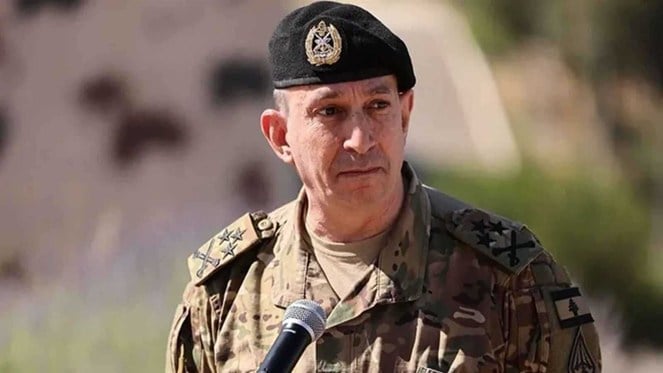
Bassil said they supported the government’s decisions, but that their real support was for the Army and its Commander, whom he believes are acting with the highest sense of responsibility while facing a campaign of hostility from those who despise the Lebanese Army.
He said they stood by him because he did not want to destroy the military institution, as some would like, stressing that the commander sought to extend the authority of the state and confine weapons to the Army, and that he therefore needed the necessary capabilities and powers to do so, specifically, the powers required to implement the government’s decision with the means available to him.
Bassil affirmed that bringing up this point wasn’t intended to help anyone evade responsibility.
He recalled that Lebanon’s strength, and the strength of its Army, had never come from the strength of any weapon, but from the unity and solidarity of the Lebanese and their rallying around the Army.
He therefore urged to protect this solidarity.
He explained that the Army had received its orders from the government and was obliged to carry them out, but argued that the institution should be allowed to determine how to implement them, without recklessness.
He also said the political authority had a duty to issue orders that were actually implementable, and had no right to issue directives it knew to be impossible merely to satisfy foreign actors or, directly or indirectly, to satisfy Israel, stressing that Lebanon did not want to be in Israel’s service.
Bassil said the current phase was complex and that the options were difficult, warning that the region was facing a project to redraw maps and borders, through opening and closing crossings, straits, and coastlines.
He added that, more importantly, a new international order is being formed on the ruins of the international legitimacy represented by the United Nations, an order based on the principle of force. He said it was enough to listen to the U.S. Secretary of War speak of a set of “no’s,” and to dismiss the need for wars that have a clear concept, legitimacy, and political soundness, to understand why Lebanon must build its unity, because it is its only strength today. He also noted that Netanyahu’s talk of a Sunni and Shiite “axis of evil,” and his plans to encircle it, showed that partition projects are no longer just theoretical or ink on paper, but are being carried out in Syria, Iraq, Yemen, Somalia, and Iran. He added: God protect Saudi Arabia and Lebanon.
Bassil said the priority today was to define choices, insisting that the choice must be unity, not partition.
He affirmed unity within 10,452 kilometers², saying Lebanon was too small to be divided.
He added that Christians exist across all of Lebanon and are not geographically confined, warning that the peripheries do not protect and that the heart becomes besieged when isolated.
He addressed Lebanon’s youth, urging them not to let anyone drag them into partition projects in the region.
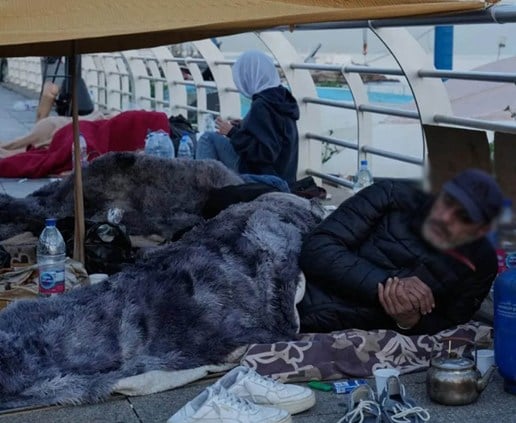
He cautioned against being swept up by populist slogans, saying the displaced are “our people” who are paying the price of a war they were pulled into, and warned that hatred toward them leads to internal fighting, tension, and explosion.
Addressing them directly, he said brotherhood stands above political differences, while noting a fundamental disagreement over the Guardianship of the Jurist, stressing that there is no guardian over them except their country and its interest.
He said this was not the time for division or for trading blame over being dragged into wars they cannot bear, arguing that the humanitarian tragedy brings them together and calling for taking shelter in the state.
Bassil affirmed that the FPM was free in its decision and urged everyone to distance themselves from their “patrons” abroad, whether Iranian, Israeli, or of any other nationality, and to rally around the state and the Army. He stated that the equation of the state, the Army, and the resistance did not start with them but with Fouad Siniora’s government in 2005, which they did not participate in, adding that the parties criticizing them and holding them responsible are the ones who took part in seven governments.
Bassil said Hezbollah must “return to its Lebanese identity,” arguing that its weapons have been openly placed at the disposal of, and in the service of, Iran’s agenda.
He said this was why they were calling on it to hand its weapons to the Army and to integrate into a defense policy that includes its weapons, if the goal is defending Lebanon, adding that defending Iran is another matter that does not concern them and that brings ruin upon its constituency.
He said they had confronted Palestinian weapons when they served external agendas, and the Syrian and Israeli weapons as well, and that they stand against any weapon when its agenda is external.
He said neutralizing Lebanon was a duty to prevent partition, border changes, and wars greater than Lebanon, stressing that this, like confining weapons, was a decision that belongs to the state.
For him, neutrality was meant to prevent any slide or reckless move, and just as confining weapons is a guarantee for all, neutralizing Lebanon is a guarantee for Lebanon’s existence; if achieved, it can help bring liberation from Israeli occupation, protect borders, and enable the investment of national resources.
Bassil said wars are chosen but rather imposed, and that Israel has always imposed them on Lebanon.
He warned that the danger today was the prevailing impression that Hezbollah was imposing wars on the Lebanese, even as he said Israel is in fact the one attacking, adding that wars end only under favorable conditions and circumstances.
He called on everyone to create the most suitable conditions now and to prepare the ground for a negotiating framework that moves the region from hostility to truce and toward true peace.
He said peace between people can lead to normalization without being imposed, because imposing it does not work, adding that whoever wants peace must make it with those who make peace.
He said peace is not imposed by force, as Netanyahu’s prevailing theory suggests, and said the idea of an international peace conference for the region could be a way to secure rights for all peoples.
Bassil added that it had lost its legitimacy, and that they did not want it to lose its popular legitimacy as well.
He said they did not want to deal with this component and this sect through the logic of dominance via external forces, calling on everyone to step away from violence, return to reason, and put Lebanon’s interest first so they can preserve the country and themselves.
Bassil stressed that war was forbidden and that solidarity was needed to prevent it.
Bassil believes that sovereignty is a national interest that opposes tutelage and humiliation, as is happening today. He sees sovereignty not merely as a slogan but as a daily practice: the state maintaining its dignity and the dignity of its people without submitting to foreign influence or external threats.
He argues that sovereignty is strengthened through national unity that defends it, adding that a soldier does not beg for his rights and that the state should grant them without him having to demonstrate. Regarding parliamentary elections, Bassil clarified that the authorities are responsible for enforcing the electoral law.
If they want elections on time, they must apply the law in force as it is; otherwise, they are seeking to postpone elections; and if they believe what is happening requires suspending the law until the war ends, they must do so and bear responsibility, alongside taking everything necessary to respect the current law and the Constitution.
















 EXCLUSIVE

 EXCLUSIVE
 EXCLUSIVE
.jpeg)